



Meet the 9 up-and-coming researchers selected to participate in WiGRAPH’s Rising Stars program, a two-year program of mentorship and workshops co-located with SIGGRAPH 2026 and 2027 to explore potential career trajectories as they enter the job market.
Click on any of our Rising Stars to learn more about them!
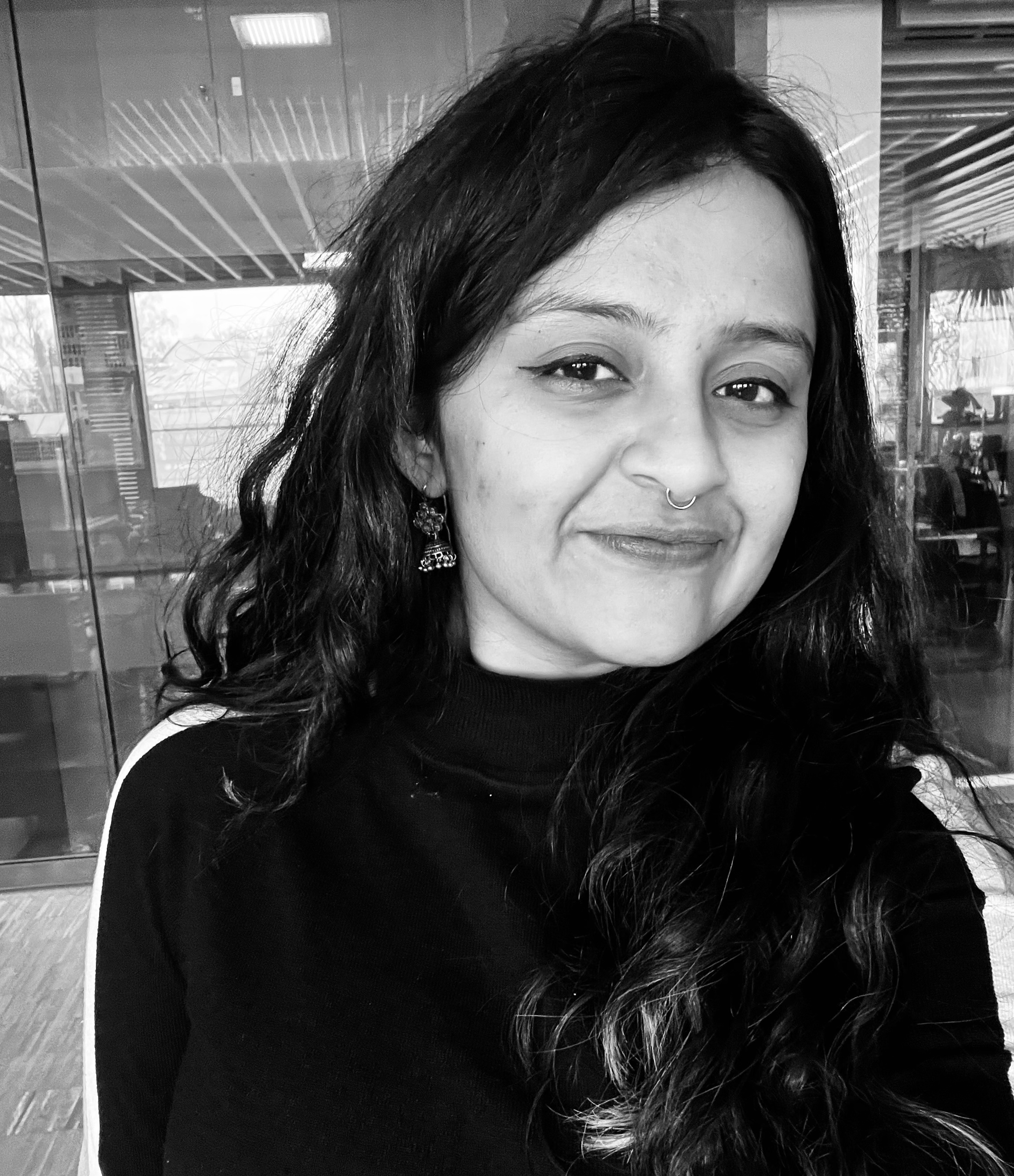
Shrisha Bharadwaj
Max-Planck Institute for Intelligent Systems
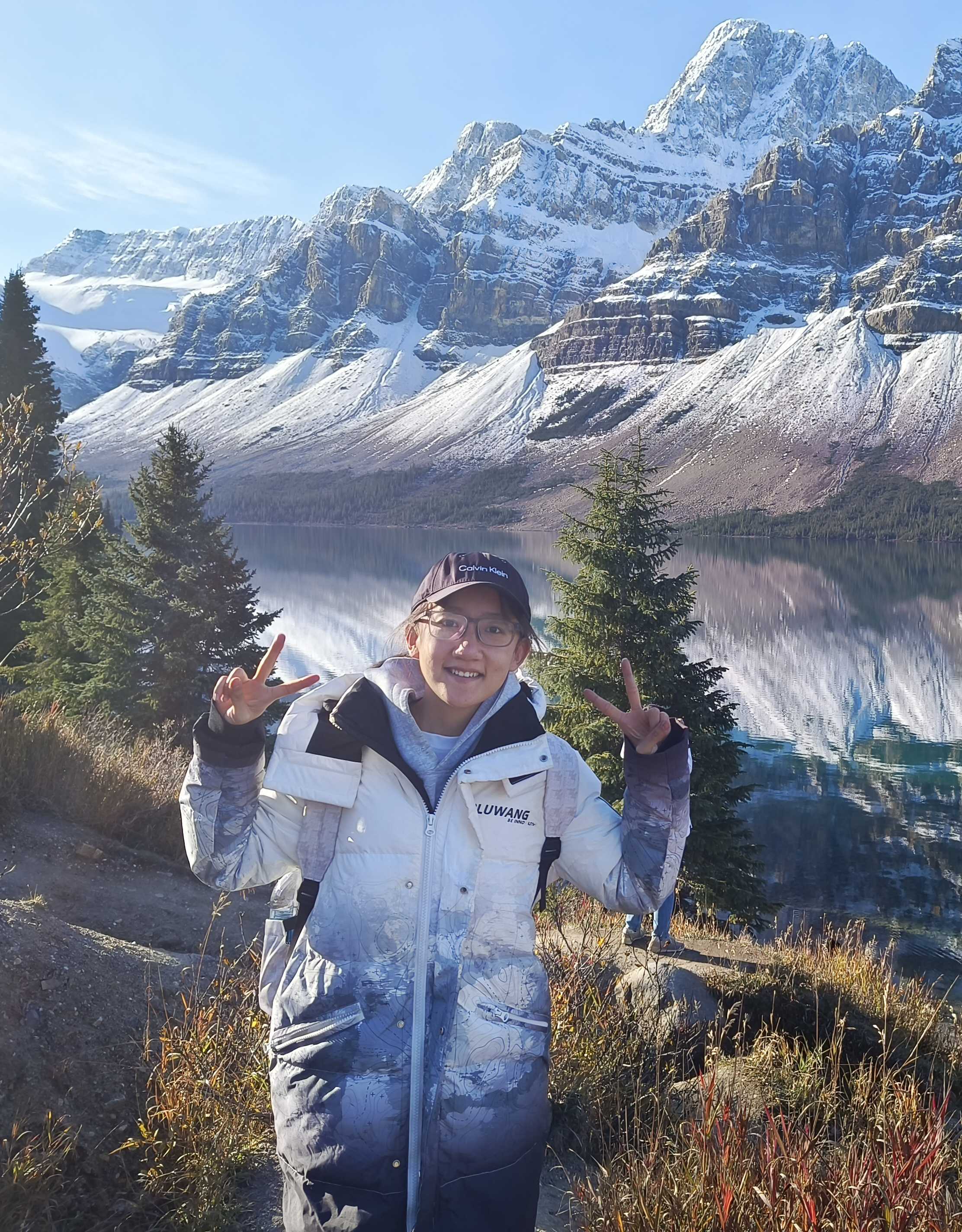
Chang Yue
University of Toronto

Jialin Huang 黄佳琳
George Mason University
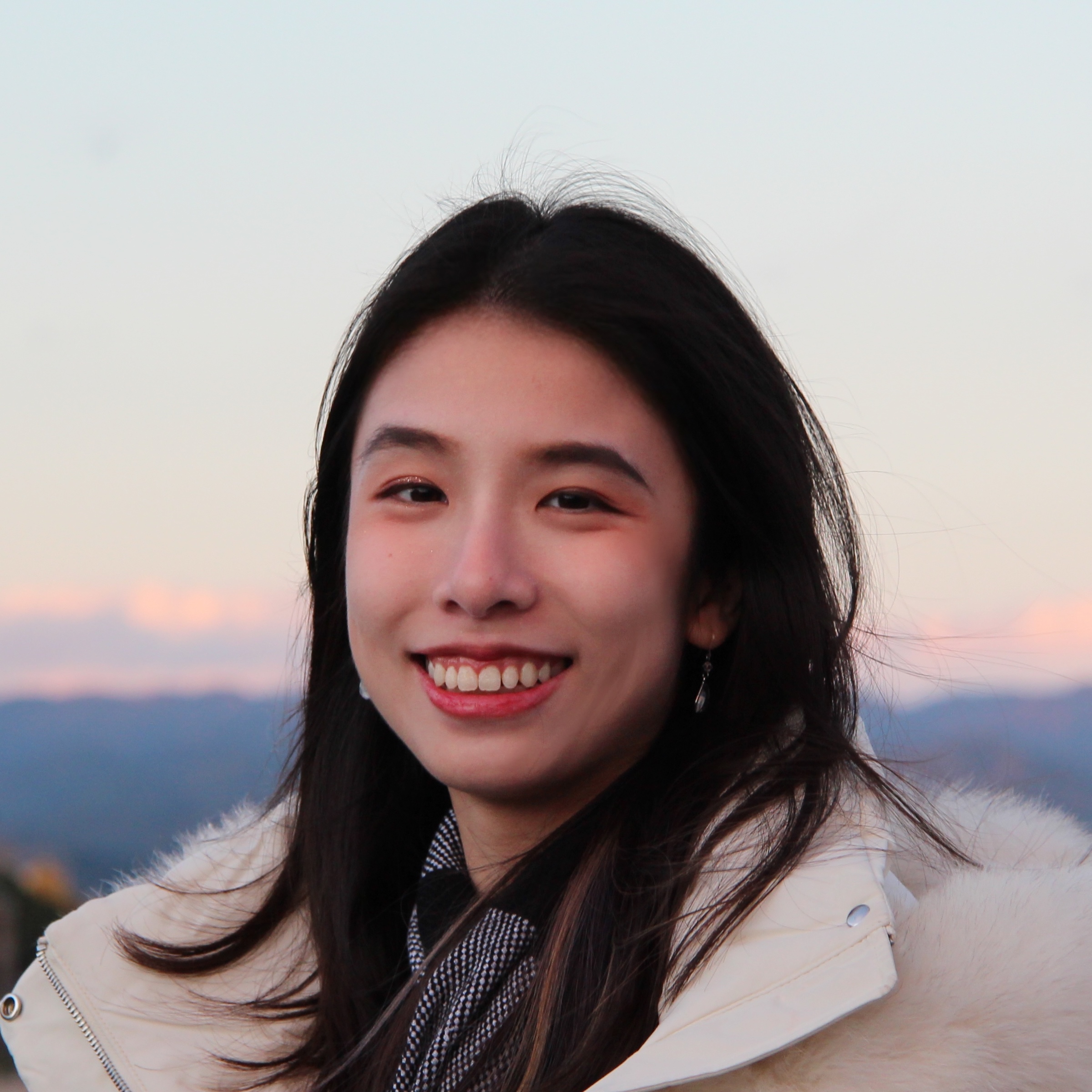
Ziqi Huang
Nanyang Technological University, MMLab@NTU
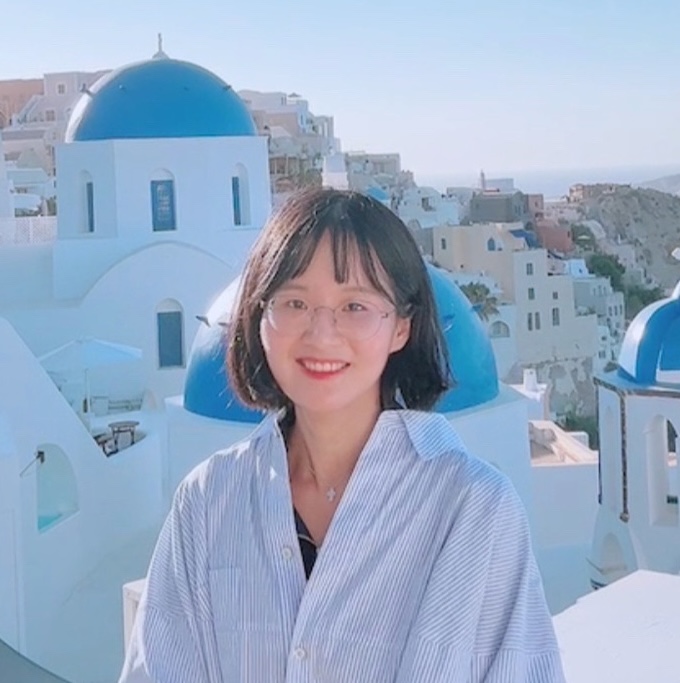
Jiye Lee
Seoul National University
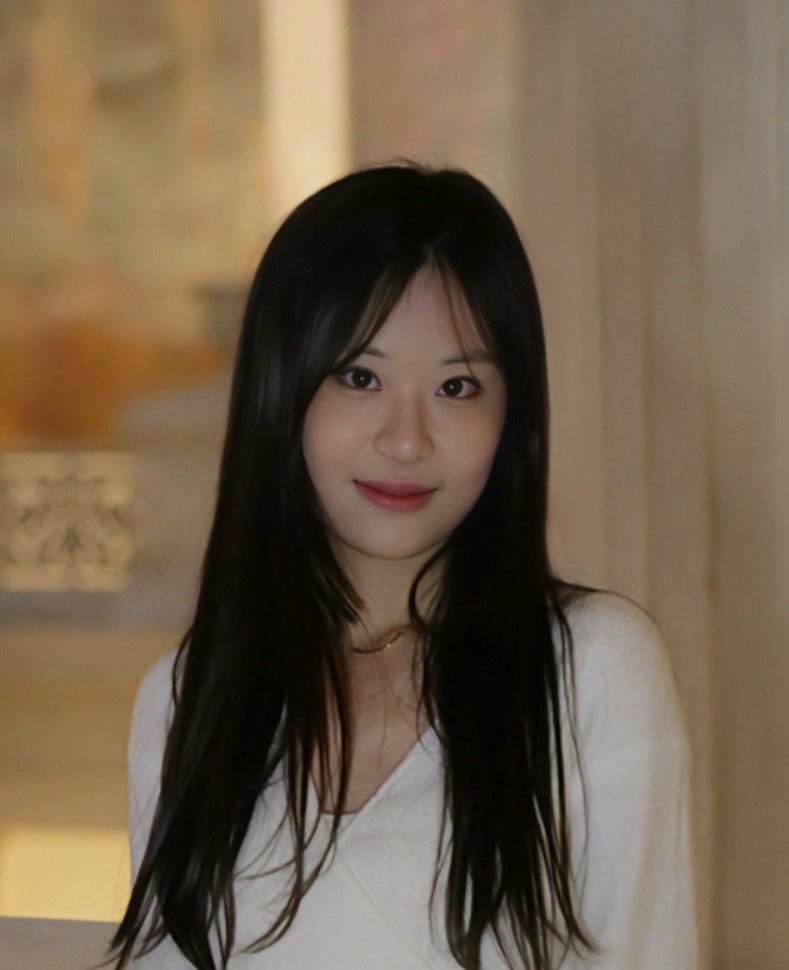
Guying Lin
Carnegie Mellon University
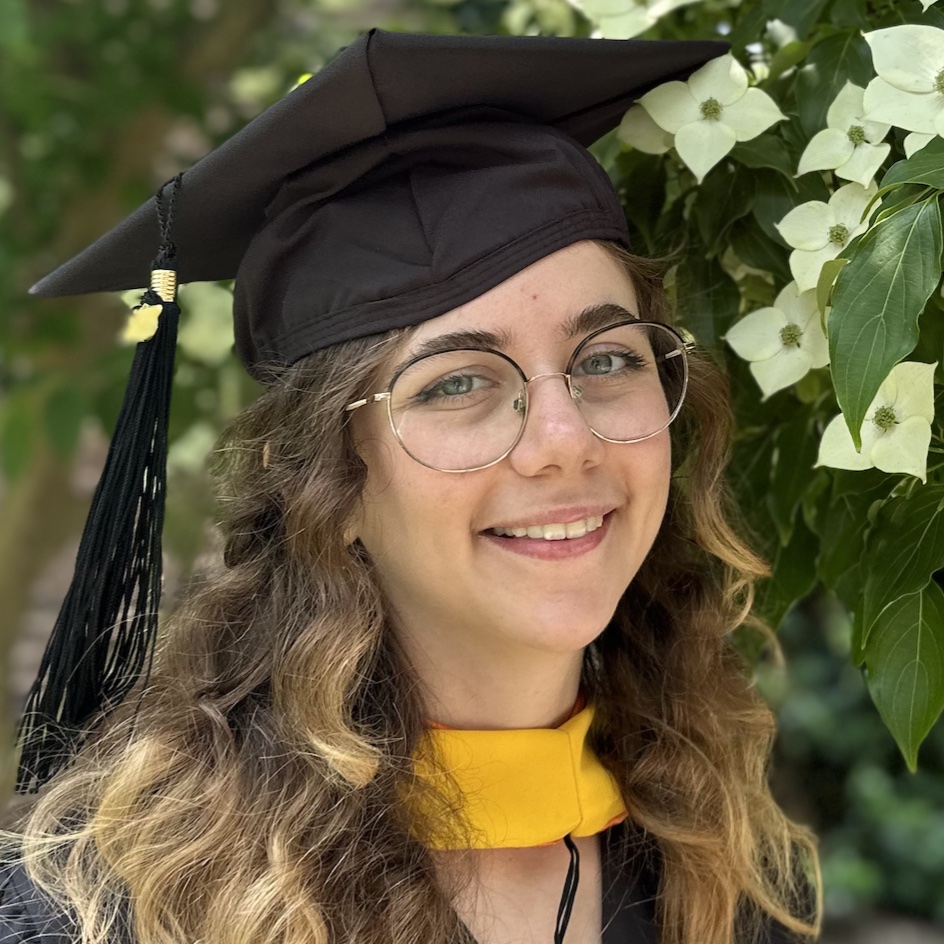
Maxine Perroni-Scharf
MIT
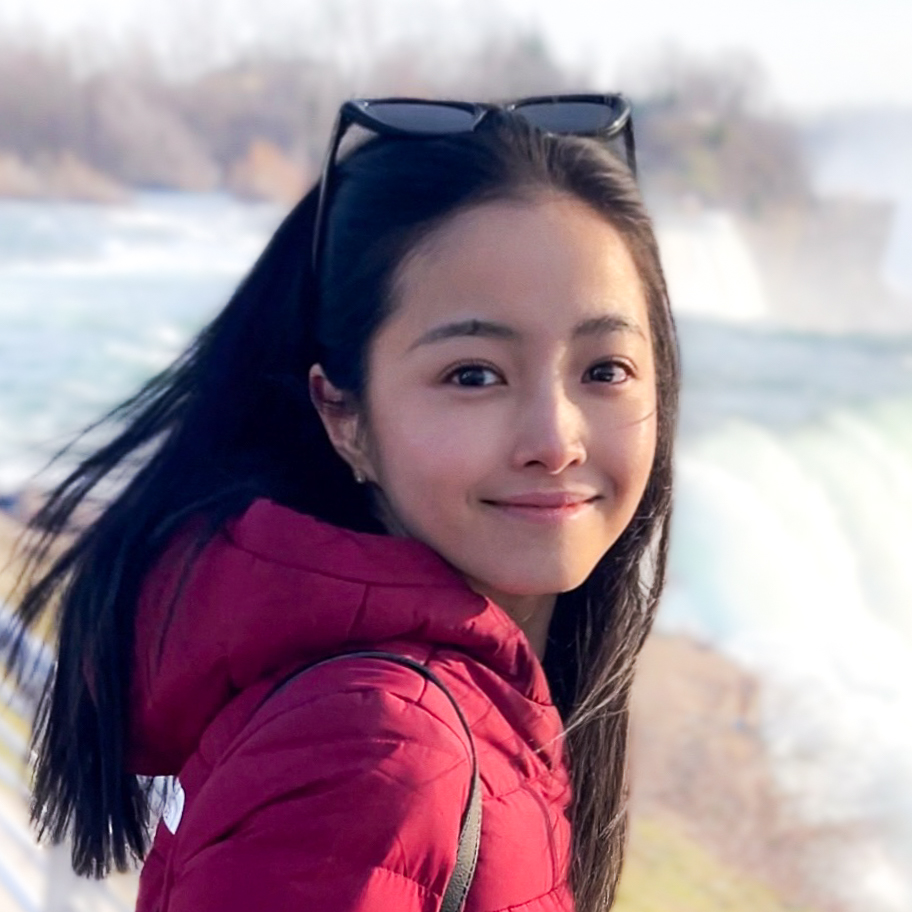
Yingsi Qin
Carnegie Mellon University
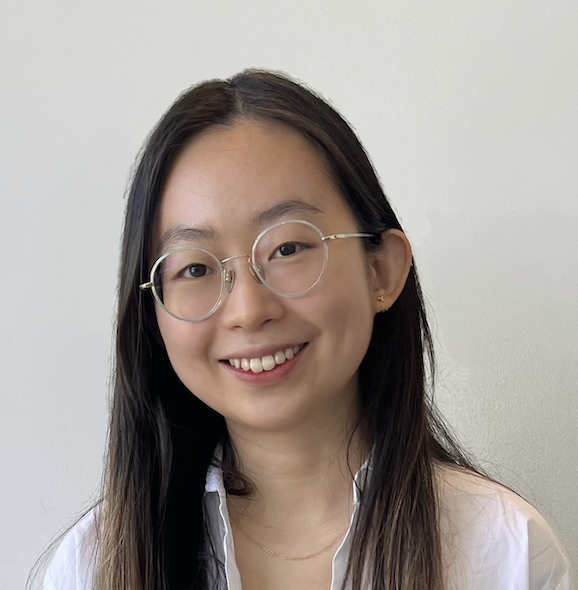
Hang "Hesper" Yin
UCSD
Meet Shrisha Bharadwaj
Research Vision: My research interests lie at the intersection of physically based rendering, neural rendering, and generative modeling. More specifically, I am interested in building models that can render highly realistic scenes with diverse materials and complex light transport. Image synthesis has advanced rapidly with latent diffusion models, which can generate plausible images that span a wide range of objects, materials, and environments. However, these models are primarily optimized for perceptual plausibility rather than physical simulation, and therefore do not inherently guarantee correct lighting, or consistency across viewpoints. In contrast, physically based rendering can produce images that remain consistent across viewpoints and illumination changes, given geometry, materials and lighting. My broader interest is to build neural renderers by incorporating physically based principles into generative models. Further, to study how to synthesize plausible and consistent light transport effects, to explore them for asset extraction and scene representation, and to finally move toward learned forward renderers that have both realism and fine-grained control.
Bio: Shrisha Bharadwaj is a PhD student at the Max Planck Institute for Intelligent Systems (MPI-IS) advised by Dr. Michael J Black and Dr. Victoria Fernandez Abrevaya. Prior to that, she worked as a research intern at MPI-IS for 2 years. She earned her masters in Machine Learning from the University of Tuebingen, and did her masters thesis under the supervision of Prof. Andreas Geiger. She interned at the Indian Institute of Science (IISc), prior to her masters under Prof. Soma Biswas and completed her bachelors in engineering at BMS College of Engineering. Apart from research, she is an amateur powerlifter, enjoys reading, and is a fan of fountain pens.
Meet Chang Yue
Research Vision: My research sits at the intersection of computer graphics and machine learning, where I develop mathematical representations for understanding and predicting physical phenomena. My long-term goal is to build computational models that efficiently capture and simulate the complex physical behaviors we observe in the real world, enabling digital systems to reason about geometry, motion, and physical interactions in a unified way. To achieve this goal, I combine mathematical structure with data-driven learning. One direction of my work extends spectral methods from individual shapes to entire shape families, providing compact and transferable descriptions of geometry and dynamics. Another focuses on representing discontinuities such as cuts, creases, and fractures, allowing neural models to capture non-smooth physical behavior while remaining differentiable and trainable. More recently, I have explored learning reduced dynamical systems directly from data through low-rank operator representations that enable efficient prediction and control. Together, these efforts bridge geometry, physics, and learning, creating models that generalize across shapes, capture complex physical behavior, and scale to applications in simulation, design, robotics, and interactive digital environments.
Bio: Chang Yue is a Ph.D. student in Computer Science at the University of Toronto, advised by Eitan Grinspun. Her research lies at the intersection of simulation, machine learning, and geometry processing, where she develops mathematical representations for physical phenomena. Prior to joining the University of Toronto, she received her M.Sc. from Peking University and her B.S. from Beihang University. Her work has appeared at venues including SIGGRAPH, SIGGRAPH Asia, ICLR, and ACM Transactions on Graphics, and has been recognized with a SIGGRAPH Best Paper Award and a SIGGRAPH Best Paper Honorable Mention. She has also worked as a Research Intern at Meta Reality Labs, where she developed data-driven methods for physical simulation. Beyond research, Chang Yue mentors undergraduate and graduate students and contributes to outreach and education initiatives. Outside of academia, she enjoys painting and sculpting.
Meet Jialin Huang 黄佳琳
Research Vision: Much of the digital world assumes you can see it. 3D modeling tools require visual precision, motion graphics assume sighted authoring, and most interfaces for creating digital content were designed with full visual access in mind. My research asks: what would these systems look like if they didn't? I work at the intersection of computer graphics, HCI, and accessibility to build new ways of perceiving and creating 3D content. My work spans sonification-based shape perception for blind and visually impaired users, generative sound design for motion graphics, and part-based 3D shape creation in VR. Each project challenges a different assumption built into existing graphics pipelines. Looking ahead, I want to bring these threads together and push further. The assumptions embedded in graphics tools go beyond visual access—they include expertise, familiarity with complex workflows, and access to professional training. I am interested in building systems that lower these barriers more broadly, expanding who gets to participate in creating and experiencing digital content.
Bio: Jialin Huang is a fifth-year PhD student in Computer Science at George Mason University, advised by Prof. Yotam Gingold. She received her B.S. in Applied Mathematics from the University of Science and Technology of China. Her research sits at the intersection of computer graphics and HCI, with a focus on building multimodal systems for 3D perception and creation, with an emphasis on accessibility. Her work has been published at SIGGRAPH Asia and ACM CHI, where MoSound received an Honorable Mention Award. She is a recipient of the GMU Distinguished Academic Achievement Award. During her PhD, she interned at Adobe Research under the mentorship of Dr. Rubaiat Habib Kazi, where she developed generative sound design workflows for motion graphics. She volunteers at a local animal shelter. Outside of research, she enjoys hiking trails, hunting for good food, and music.
Meet Ziqi Huang
Research Vision: My research focuses on human-machine collaborative systems for visual content creation, building multimodal generative models that enable users to intuitively synthesize and manipulate high-fidelity visuals. A critical gap persists in today's generative AI ecosystem: technical capabilities have advanced rapidly, yet visual synthesis systems remain misaligned with human intent and real-world needs. My work addresses this across three interconnected dimensions — granular multimodal control, human-aligned evaluation, and cognition-grounded generation — forming a flywheel that scales trustworthy visual generation toward physically grounded simulation. Ultimately, this drives my longer-term vision: leveraging generative modeling to power simulative and evaluative applications such as embodied intelligence, transforming passive visual synthesis into active, world-aware environments.
Bio: Ziqi Huang is a Ph.D. candidate at MMLab@NTU, Nanyang Technological University, Singapore, advised by Prof. Ziwei Liu, and received her Bachelor's degree from NTU in 2022. Her research lies at the intersection of computer vision and deep learning, with a focus on generative models and their evaluation. She has been fortunate to collaborate with Meta Superintelligence Labs, Netflix, ByteDance, A*STAR, and Shanghai AI Lab. Ziqi is a recipient of the Apple Scholars in AI/ML PhD Fellowship, Google PhD Fellowship, Microsoft Research Fellowship, Meshy Fellowship, Lee Kuan Yew Gold Medal, ACL's SAC Highlights Award, and the Outstanding Paper Award at ICCV Workshop.
Meet Jiye Lee
Research Vision: My research aims to enable virtual and embodied agents to move and interact as naturally and expressively as humans do. Achieving this requires motion data that captures the full richness of human behavior, from everyday activities and complex interactions to subtle expressive details. Yet conventional motion capture often struggles to scale beyond constrained studio environments and misses the very details that make motion feel alive. I approach this challenge from two complementary directions. First, I design lightweight motion capture systems built on multimodal sensory inputs such as wearable IMUs, egocentric cameras, and audio to make motion capture practical in everyday settings. Second, I develop motion synthesis and enhancement methods that fill in what sensors cannot reliably measure. These methods mainly target capture-challenging scenarios involving human-object and social interactions with fine-grained details such as hand and facial motion. By combining accessible motion capture with expressive motion synthesis, I aim to bring virtual and embodied agents closer to show human-like movements across diverse environments.
Bio: Jiye Lee is a PhD student in the Department of Computer Science and Engineering at Seoul National University, advised by Prof. Jungdam Won. Her research focuses on human motion capture and synthesis for virtual agents that move and interact naturally as humans do. Before starting her PhD, she received B.S. degrees in Computer Science and Engineering and in Chemistry from Seoul National University. She has previously interned at Meta Codec Avatars Lab and will join Meta Reality Labs as a research scientist intern this summer. Jiye also served as a co-organizer of the Global 3D Human Poses Workshop at CVPR 2025. In her free time, Jiye enjoys traveling with her camera in hand, listening to music and going to live concerts, and trying new desserts as she believes every good day deserves something sweet.
Meet Guying Lin
Research Vision: A long-standing goal in computer graphics and vision is to build digital 3D worlds that are realistic, accurate, editable, and interactive. Recent learning-based methods have greatly expanded what can be reconstructed or generated from sparse inputs, yet many 3D AI systems still lack the geometric fidelity and physical grounding needed for reliable downstream use. Fine details may be smoothed away, thin or open structures may be poorly captured, and generated scenes may look plausible while violating basic physical constraints. My research works toward 3D AI systems that are both geometrically precise and physically grounded. I design compact and efficient representations for high-fidelity geometry, with an emphasis on preserving complex surface structures such as sharp features, thin parts, and open boundaries. I also integrate simulation and physical constraints into generation and reconstruction pipelines, so that the resulting 3D worlds are coherent, interactive, and useful for downstream applications. Ultimately, my goal is to build 3D AI systems that combine geometric accuracy, physical reasoning, and practical usability across creation, simulation, and embodied intelligence.
Bio: Guying Lin is a PhD student at Carnegie Mellon University, advised by Prof. Minchen Li. She previously received her MPhil degree from the University of Hong Kong, where she was advised by Prof. Taku Komura and Prof. Wenping Wang, and her B.E. degree from Zhejiang University. She completed an internship at NVIDIA, working with Dr. Donglai Xiang and Dr. Nicholas Sharp, and is currently interning at Genesis AI. Outside of research, she enjoys K-pop dancing, cooking, and art.
Meet Maxine Perroni-Scharf
Research Vision: My research aims to make computational fabrication less uncertain. Today, even when someone has a clear idea of what they want to make, there is often a large gap between the digital design and the final fabricated object: how it will look, how it will behave mechanically, and what tradeoffs it will create in material use, print time, or waste. I want to close this gap by building graphics and fabrication tools that help users preview, optimize, and reason about physical outcomes before they print. My work connects visual models, material behavior, simulation, and user-facing design interfaces. I am especially interested in 3D printing appearance, mechanical performance, and sustainability: giving users better control over how prints look, how strong they are, and how much material they require. Long term, I want to build fabrication systems that help people translate design intent into reliable physical objects with less trial and error.
Bio: Maxine Perroni-Scharf is a PhD student in Electrical Engineering and Computer Science at MIT, advised by Stefanie Mueller. Her research sits at the intersection of computer graphics, HCI, and computational fabrication, with a focus on tools for 3D printing, mechanical performance, and sustainable fabrication. She received an M.S.E. in Computer Science from Princeton University, advised by Szymon Rusinkiewicz, and an A.B. in Mathematics and Computer Science with a minor in Digital Arts from Dartmouth College. Maxine is a former MathWorks Fellow, MIT Morningside Academy for Design Fellow, MIT Andrew and Erna Viterbi Fellow, and Adobe Women in Technology Scholar. Her work has been published at SIGGRAPH, UIST, CHI, and ICML. She serves on the ACM Women in Graphics executive committee, contributes to mentorship through MIT EECS GAAP, and has served as president and trustee of Sidney-Pacific Graduate Residence. Outside research, she enjoys painting, digital art, music, and skiing.
Meet Yingsi Qin
Research Vision: I am broadly interested in embedding fundamental physical laws, such as complex light transport and 3D geometry, into computational and generative frameworks to better understand and interact with the visual world. In most imaging and display systems, the physical optics that carry light to sensors and our eyes remain largely static, fixing in hardware the very assumptions the driving algorithms should be free to question. My research in spatially adaptive imaging and 3D display systems asks what becomes possible if we break those assumptions: the optical layer itself becomes spatially programmable and scene-aware, conforming to the geometry of the world. By co-designing optics with algorithms, my work treats sensing and display as active and adaptive processes rather than fixed front-ends. Looking ahead, I aim to bring adaptive computational optics into broader vision and display pipelines and couple them with embodied intelligence. My goal is to build systems that do not merely process light but actively shape how they see and render.
Bio: Yingsi is a PhD candidate in Electrical and Computer Engineering at Carnegie Mellon University, advised by Prof. Aswin Sankaranarayanan and Prof. Matthew O'Toole. Her research interests include computer vision, computational imaging and displays, 3D perception, and deep learning. Yingsi's work has received the Best Paper Award at SIGGRAPH 2023, the Best Demo Award at ICCP 2023, and the Best Paper (Marr Prize) Honorable Mention Award at ICCV 2025. She is a recipient of the James Sprague Presidential Fellowship and the Tan Endowed Graduate Fellowship at CMU. Yingsi holds a B.S. in Computer Science from Columbia University and a B.A. in Physics from Colgate University. She has interned at Meta Reality Labs, Snap Research, and Google Search. Beyond research, Yingsi is a licensed paragliding pilot and enjoys singing, playing musical instruments, photography, badminton, and hiking.
Meet Hang "Hesper" Yin
Research Vision: My research interests are discrete differential geometry, geometric mechanics, and computer graphics. Computer graphics embraces creative scenarios like solving simulation problems on surfaces like a bunny or the Klein bottle. These creative scenarios motivate studying partial differential equations (PDE) in a much more general geometric and topological setting, and lead to a deeper investigation of the underlying math and physics that are often overlooked in other disciplines. My research focuses on developing new theories and algorithms for these scenarios, with the broader goal of advancing both artistic expression in computer graphics and scientific discovery in physics and engineering. Specifically, in my Ph.D. research, I study fluid dynamics and thin-shell elastostatics on topologically nontrivial domains, where I develop accurate simulation frameworks while also establishing new theories. I believe playfulness and scientific rigor are inseparable — and my work uses mathematics and computation to move between the two. Looking ahead, I wish to continue investigating the mathematical and physical theory behind a variety of curious problems that occur in computer graphics and beyond, and use those theories to develop discrete geometric frameworks that can be used at the boundary of the virtual world and the real world.
Bio: Hesper is a Ph.D. candidate at the UCSD Center for Visual Computing, advised by Prof. Albert Chern. Her research focuses on discrete differential geometry, geometric mechanics, structure-preserving discretization and simulations. During her Ph.D., she also interned at Adobe Research and Pixar Animation Studios. She received her bachelor's degree from Carnegie Mellon University, where she was fortunately a part of the Geometry Collective and the Augmented Perception Lab. After that, she interned at EPFL's Geometric Computing Lab and Taichi Graphics. Besides working with geometry and topology on computers and whiteboards, Hesper is also an aspiring ceramic artist. She enjoys books, films, and, more recently, creative nonfiction writing. She is passionate about community outreach and served as outreach coordinator at UCSD’s Graduate Women in Computing organization. She is selected as a Young Researcher participant at the 13th Heidelberg Laureate Forum.